Everyone plans a Kenya trip around one migration. Wildebeest cross the Mara River, cameras click, and the herds move on. There is a second migration happening at the same time. It is quieter and far larger in raw numbers, yet most visitors miss it completely. Millions of birds fly south from Europe, Asia, and the Middle East every year. They spend the northern winter in Kenya’s lakes, forests, and wetlands. Touring Insights breaks down when that movement peaks and where to stand for it. This guide also covers what it actually costs to go looking.
What Is Kenya’s Bird Migration, Exactly?
Kenya sits on a major flyway between the Palearctic region (Europe, North Africa, and much of Asia) and southern Africa. Every year, roughly two billion birds worldwide make this kind of north-south journey. A large share funnel through the Rift Valley and the East African coast. The terrain there offers thermals, wetlands, and food along the way.
These are called Palearctic migrants, and they arrive in Kenya alongside the country’s own resident and intra-African migrant species. The result is one of the richest bird lists on the continent. Kenya has more than 1,100 recorded species, second in Africa only to the Democratic Republic of Congo. That country is roughly four times Kenya’s land area.
When Do Migratory Birds Arrive in Kenya?
Palearctic migrants start showing up from late September. Numbers build through October and November as birds flee the northern winter. Most stay through the dry months and begin heading back north from March into April. The two migration “windows” bracket the northern hemisphere’s winter this way.
- October to November: peak arrival, heaviest passage at inland stopover sites
- December to February: migrants settled in for the winter, easiest steady viewing
- March to April: return passage north, a second smaller peak
This overlaps with Kenya’s short and long rains. A trip timed around the shoulder months can deliver green landscapes, fewer crowds, and strong bird numbers.
Ngulia: Kenya’s Most Important Migrant Bottleneck
The single best-documented migration site in Kenya is not a lake. It is a lodge. Ngulia Safari Lodge sits on the Ngulia Hills inside Tsavo West National Park. Low cloud and mist regularly settle there on November and December nights. Migrating birds flying at altitude drop low to avoid the cloud and get drawn toward the lodge’s lights. Researchers have studied this phenomenon since 1969.
Ornithologists from the National Museums of Kenya run an annual ringing project at Ngulia during these foggy nights. On a single good night, they have ringed several thousand birds, mostly marsh warblers, sprossers, and other small Palearctic passerines. It remains one of the largest bird-ringing operations anywhere in Africa. For visitors, it is a rare chance to watch migration science happen live, not read about it later.
Rift Valley Lakes: The Flamingo Circuit
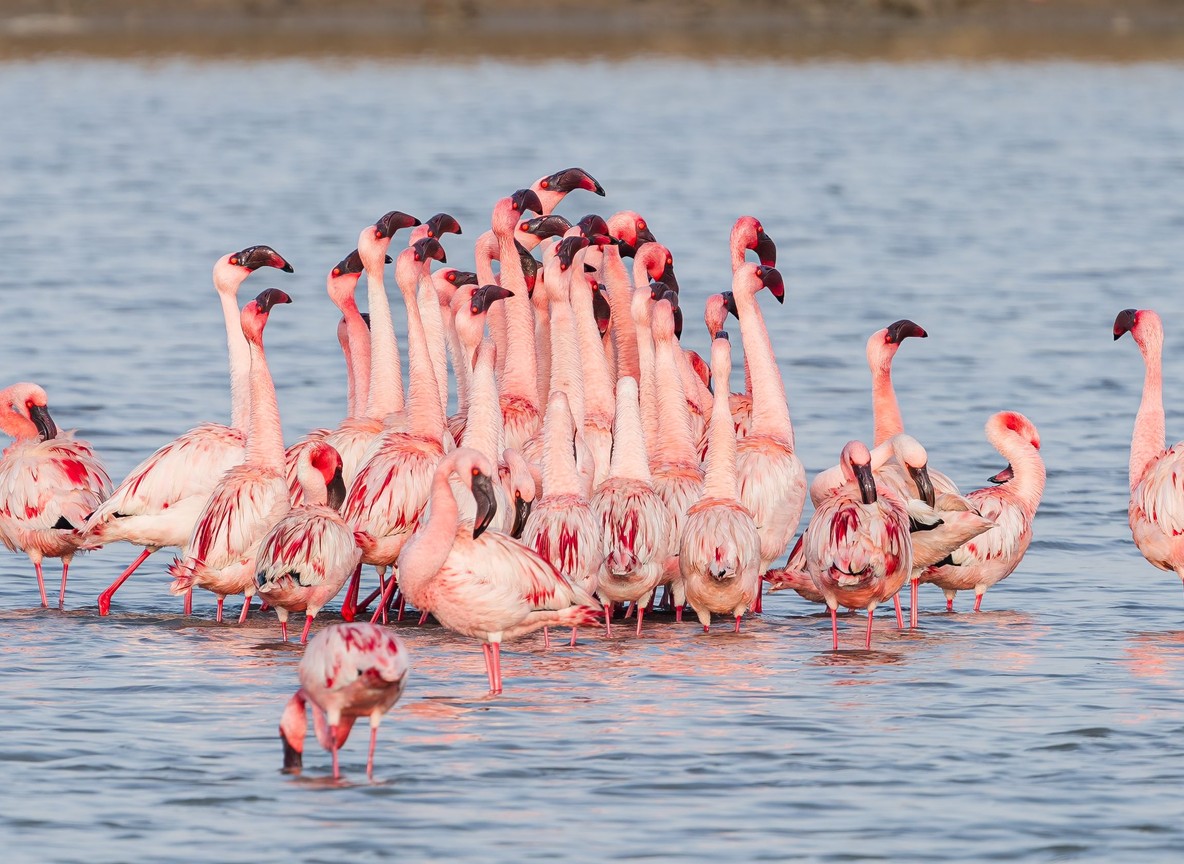
Kenya’s Rift Valley lakes have long drawn birders for one bird above all: the lesser flamingo. Lake Nakuru National Park is a 188 km2 walled sanctuary north of Nairobi. It built its reputation on enormous pink flocks feeding on algae in the shallows. The park also holds more than 450 recorded bird species overall.
Flamingo numbers at Nakuru have shifted in recent years. Rising water levels have diluted the lake’s salinity, pushing some flocks toward saltier Rift Valley lakes such as Bogoria. The lesson for planning a trip is simple: flamingo numbers move between lakes from year to year. Check current sightings before locking in a single lake as your only stop. Treat Nakuru as a strong all-round birding park, even in years when flamingo numbers there are lower.
Kakamega Forest: Kenya’s Rainforest Specialists
Western Kenya holds a completely different bird community. Kakamega Forest is Kenya’s last major remnant of the Guineo-Congolian rainforest that once stretched across Central Africa. It covers roughly 238 km2 and hosts species found nowhere else in Kenya, including the blue-headed bee-eater and Turner’s eremomela. This is a forest-interior birding trip rather than a savanna one. Expect narrow trails, guided walks, and a slower pace than a Rift Valley lake circuit.
Coastal Wetlands: Waders on the Watamu Shoreline
The Kenyan coast pulls in a third distinct group. Shorebirds and waders winter there on tidal mudflats rather than inland lakes. Mida Creek, near Watamu, is one of the East African coast’s most important sites for Palearctic waders, including crab plovers. It also hosts resident mangrove and creek specialists. Guided canoe and boardwalk trips through the creek time low tide for the best feeding activity. A Watamu stop is worth building around the tide table, not just the calendar date.
Where to Go and What It Costs
Fees and access vary a lot by site. Getting this wrong is the easiest way to blow a birding day. The table below covers the core circuit with named entry points and current indicative figures.
| Site | Distance/access from Nairobi | Non-resident entry fee | Peak migration window |
|---|---|---|---|
| Ngulia Safari Lodge, Tsavo West NP | Approx. 240 km / 4-5 hr drive, or fly to Kilaguni Airstrip | $80/day (Tsavo West NP entry) | Late Nov-Dec (fog nights) |
| Lake Nakuru National Park | Approx. 160 km / 2.5-3 hr drive | $90/day | Year-round, best Oct-Apr |
| Kakamega Forest | Approx. 415 km / 6-7 hr drive, or fly to Kisumu (1 hr) then drive (1 hr) | Indicative $20-30/day (Kenya Forest Service; confirm current rate locally) | Year-round, resident specialists |
| Mida Creek / Watamu | Approx. 520 km / 8-9 hr drive, or fly to Malindi (1 hr) then drive (30 min) | Community conservancy fee, indicative $10-15/day | Oct-Apr for Palearctic waders |
| Amboseli National Park (swamp birding) | Approx. 240 km / 4-5 hr drive, or fly to Amboseli Airstrip (45 min) | $90/day | Year-round, wetter months strongest |
Prices are indicative and can change, so confirm current KWS and Kenya Forest Service rates before booking. Always carry a printed or downloaded fee schedule for community conservancy stops, since card payment is unreliable there.
Planning a Trip Around Both Migrations
The bird migration season (October through April) overlaps with parts of the wildebeest migration in the Mara. A well-timed itinerary can realistically cover both. Early in the bird season, October and early November, the Mara still holds migration herds moving toward the Serengeta border. Rift Valley lakes and Tsavo are already seeing strong Palearctic arrivals at the same time. That overlap window is short and worth planning around deliberately rather than assuming it will happen by default.
Explorer Notes
A few things guides mention that do not always make it into general trip advice. First, dawn is non-negotiable for migrant activity. Birds that flew all night often feed hard in the first two hours of light, then go quiet by mid-morning. Second, pack a proper field guide or app with offline maps, since signal drops out around most sites. A guide’s local knowledge goes further when you can cross-check a call or a plumage detail together. Third, at Ngulia specifically, ask your lodge if a ringing session is happening during your stay. Visitors are sometimes welcome to watch from a respectful distance. It is a genuinely different way to understand migration scale, compared with counting birds through binoculars. Finally, a scope tripod earns its luggage space at Nakuru and Bogoria. Flamingo flocks there are often too far for binoculars alone to resolve individual birds.
What to Read Next
- Want a broader introduction to birding logistics across the country? Read our Kenya birding safari guide.
- Curious how Lake Nakuru’s flamingo numbers actually work? See our Lake Nakuru flamingos and wildlife guide.
- Deciding between a birding-first or mammal-first safari? Check our birdwatching vs mammal safari guide.
FAQ
When is peak bird migration season in Kenya? Palearctic migrants arrive from late September and peak in October and November. They stay through the northern winter, then head back north from March into April.
What is the Ngulia bird ringing project? It is an annual ornithological project at Ngulia Safari Lodge in Tsavo West National Park, running since 1969. Researchers ring thousands of migrating birds there, drawn low by fog on November and December nights.
Is Lake Nakuru still good for flamingos? Flamingo numbers at Nakuru shift year to year as water chemistry changes, sometimes pushing flocks toward other Rift Valley lakes. Nakuru remains strong for overall bird diversity even in lower-flamingo years.
Do I need a specialist guide for bird migration season? Not strictly. A guide familiar with call identification helps you find far more species per day than birding alone. This matters especially in forest habitat like Kakamega.
Can I combine bird migration season with the wildebeest migration? Yes. In October and early November, the wildebeest migration’s tail end is still in the Mara. At the same time, strong Palearctic bird arrivals are underway elsewhere in Kenya. The window is short, so plan around it specifically.
Bird migration season rewards early starts and a flexible route more than any single park choice. Want help building a route across the Rift Valley lakes, Tsavo, and the coast? Visit our Tour Packages page, or ask a partner operator which of these sites fit your dates.
Further reading
More safari planning resources
- Wildebeest migration map from SafariPure
- Rift Valley lakes map from Valley Safaris
- Mara River crossing guide on Touring Insights
- Great Migration safari collection on FindMySafari
Related guides: First Safari vs Return Visit: When Should You Go to Kenya.